Showing posts with label Savory. Show all posts

Friday, November 17, 2017

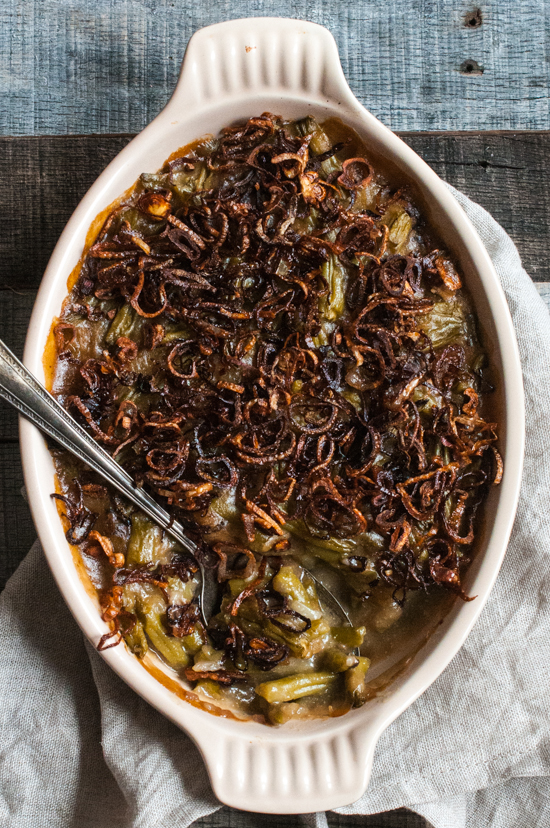
Green Bean Casserole (Paleo, AIP + Green Beans, Nut-free, Whole30)

Green Bean Casserole (Paleo, AIP + Green Beans, Nut-free, Whole30)

Traditional green bean casserole, made with cream of mushroom soup and crispy onions, has been a favorite of mine at most holiday meals (Thanksgiving, Christmas, Easter…). However, when I went gluten free in 2012 and then AIP/Paleo in 2014, it became a side dish I could no longer safely eat. Even though there are always other great side dishes at holiday meals, but I still was missing green bean casserole…. 

Green Bean Casserole (Paleo, AIP + Green Beans, Nut-free, Whole30)

Last year, I attempted several times to make an almost AIP green bean casserole with organic frozen green beans, but it always ended up too watery, even when I made the base mixture pretty thick. This year, I was determined to perfect the recipe I started last year. By switching from using frozen green beans to using organic canned green beans, I was finally successful!

Green Bean Casserole (Paleo, AIP + Green Beans, Nut-free, Whole30)

I realize that the decision to use canned green beans may be a controversial one, but for me green bean casserole is a dish I only make a couple times a year for holiday gatherings. Plus, this recipe is already a bit more labor intensive for a side dish and I didn’t want to complicate the preparation any further by requiring a lot of extra steps (or time) for the beans. It might be possible to use roasted green beans or boiled/drained green beans in place of the canned, but those are two variations I haven’t tried.

Green Bean Casserole (Paleo, AIP + Green Beans, Nut-free, Whole30)

Since next week is Thanksgiving, here are a few of my favorite AIP/Paleo Thanksgiving recipes. Many will be things that I’ll be making next week, along with green bean casserole :)


Green Bean Casserole (AIP + Green Beans, Paleo, Nut-free)
yields around 6 servings

1 tablespoon fat (bacon fat, lard, or duck fat work best)
1 cup (120 grams) red or yellow onion, finely chopped
1 cup (65 grams) baby bella mushrooms, finely chopped

1 tablespoon fat (bacon fat, lard, or duck fat work best)
4 tablespoons (40 grams) cassava flour

1 cup broth
1 tsp onion granules
1 tsp garlic granules
2 tablespoons coconut aminos
2 tablespoons coconut milk
2 dashes fish sauce
1 tsp fine-grain sea salt 

2-14.5 oz cans of organic green beans, drained (make sure the ingredients are clean!)

2 to 3 medium Shallots, thinly sliced
Palm shortening, for frying
Fine sea salt, for sprinkling

  1. Preheat the oven to 350 F. 
  2. Heat the first measure of fat in a large skillet over medium heat. Add the onion and mushroom and sauté for 5 to 6 minutes, or until the veggies are softened. Stir occasionally.
  3. Melt the additional tablespoon of fat and stir with the soften veggies. Sprinkle the cassava flour over and stir until everything is well coated and the flour begins to brown slightly, approximately 1 minute.
  4. Slowly add the broth, stirring constantly. Cook an additional 3 to 4 minutes, or until thickened. 
  5. Add the onion granules, garlic granules, coconut aminos, coconut milk, and fish sauce. Cook an additional minute or two. 
  6. Gently fold in the drained green and transfer the mixture to a baking dish (8x8 Pyrex or oval Le Creuset gratin dish). Bake in the preheated oven for 30 minutes. 
  7. Just before the casserole is done baking, make the crispy shallots for the topping. Thinly slice the shallots, and set aside. Melt the palm shortening in a large skillet over medium high heat—there should be 1/8” to 1/4” of oil in the bottom of the pan, depending on how thinly the shallots are sliced. 
  8. Add the shallots to the hot oil and fry until golden brown and crispy. Do in batches, if necessary. Add more palm shortening to the pan, as needed. Remove from the oil with a fork and transfer to a paper towel lined plate. Sprinkle with a little fine sea salt while the fried shallots are still hot. 
  9. Just before serving, evenly disperse the fried shallots over the top of the casserole. The casserole may be assembled a day or two in advance and baked the day of serving. Fry the shallots just before serving. Store any leftovers in the fridge. 
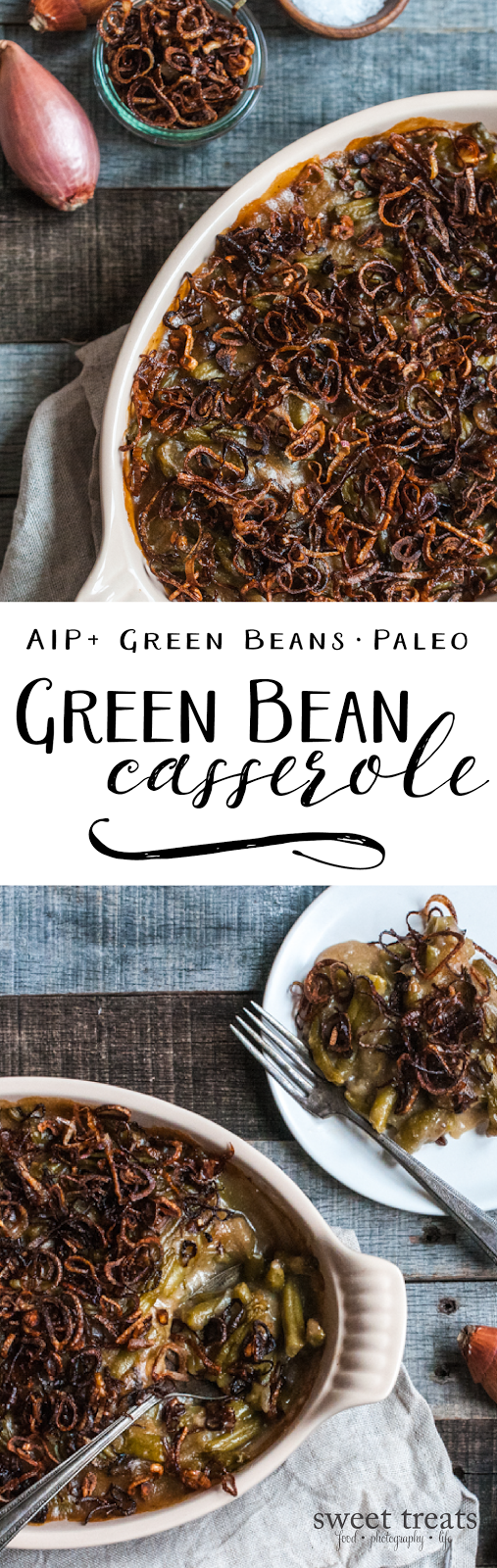
Green Bean Casserole (Paleo, AIP + Green Beans, Nut-free, Whole30)

Green Bean Casserole (Paleo, AIP + Green Beans, Nut-free, Whole30)

This post includes affiliate links, meaning Sweet Treats makes a small commission off items purchased 
after a link is clicked with no additional cost to you. Thanks for your support.

Tuesday, January 31, 2017

Loaded Sweet Potato Fries (AIP & Paleo)

Loaded Sweet Potato Fries (AIP & Paleo)

I’m not really a big Super Bowl (or football) person, though I do love a good Super Bowl party, mainly for the food, time with friends, and the commercials. This year, things will be much different, since we’ve moved to the middle of New England Patriots territory & they happen to be playing in the 2017 Super Bowl. Let me tell you…. people around here take their NFL football *very* seriously.

Loaded Sweet Potato Fries (AIP & Paleo)

While I might feel more inclined to cheer for a particular team this year, I’m still most excited about the food! Specifically, I’m excited about making some AIP/Paleo options to share with our new friends. Last year, I made plantain chip chicken in nugget form, cutting chicken breasts into pieces before coating them in the plantain chip crust & baking them on a rack. I also made the red sangria mocktail from The Healing Kitchen, and some amazing paleo brownies from Joshua Weissman/Slim Palate (the brownies require an egg & chocolate reintro; I also subbed coconut oil for the butter). All super delicious. (haha, pun intended!)

Loaded Sweet Potato Fries (AIP & Paleo)

I’m still debating exactly what I’ll take to this year’s party, but these loaded sweet potato fries are a serious contender. I first made them on a whim last summer for one of our burger nights & they were such a fun twist on normal sweet potato fries. Plus the arugula pesto they’re topped with adds some extra veggie power.

Loaded Sweet Potato Fries (AIP & Paleo)

If you’re looking for some other party food ideas, whether for yourself or to share with others, here are a few more options:


Loaded Sweet Potato Fries (AIP & Paleo) 
Yields 2 generous servings; batch can be easily doubled or tripled for a larger group 

For the Fries:
1 pound white sweet potatoes (I prefer Hannah)
28 g (2 tablespoons) duck fat, melted
1/4 teaspoon sea salt
1/4 teaspoon garlic powder

  1. Preheat the oven to 425 F. 
  2. Wash and cut the sweet potato into thin fry-shaped pieces, 1/4 to 1/2 inch in width. 
  3. Pour the melted duck fat into a bowl, add the sweet potato fries, and toss to coat. 
  4. Arrange the fries on an un-lined rimmed baking sheet (I used a quarter sheet), making sure there is a little space between each fry. Dust the fries with sea salt & garlic powder.
  5. Bake in the preheated oven for 20 minutes, then remove the pan from the oven and carefully flip the fries over. Roast for an additional 10 to 20 minutes, or until golden brown. While the fries are roasting, prepare the toppings (see below). 

To Assemble: 
1 batch of sweet potato fries (see above)
2 tablespoons arugula pesto, plus additional for dipping, if desired
3 strips of bacon, cooked and crumbled
1 tablespoon thinly sliced scallion
1 to 2 teaspoons cilantro leaves
sprinkling of smoked Maldon sea salt

  1. Just before serving, drizzle the roasted sweet potato fries with the arugula pesto. Top with the crumbled bacon, sliced scallion, and cilantro leaves. Sprinkle with smoked Maldon to taste. Serve with additional arugula pesto for dipping, if desired. 
Loaded Sweet Potato Fries (AIP & Paleo)


This post contains affiliate links, meaning Sweet Treats makes a small commission off items purchased 
after an Amazon link is clicked with no additional cost to you. Thanks for your support.
SaveSave

Friday, April 8, 2016

Egg-free Tuna Salad (AIP, Paleo, Whole30)

Egg-free Tuna Salad (AIP, Paleo, Whole30)

From kindergarten through 8th grade, my two younger sisters and I attended a very small private school that did not have a traditional school lunch program, meaning that my mom packed lunches for us most days. One of my very favorites, probably more towards the middle school side of education, was tuna salad with corn chips & a tiny can of V8. The tuna salad—based on my Grandma Jones’s recipe—was made with canned tuna, kraft mayo, diced celery, celery seed & onion powder. I can still taste her version now, if I really think about it.

Egg-free Tuna Salad (AIP, Paleo, Whole30)

Egg-free Tuna Salad (AIP, Paleo, Whole30)

Tuna salad has changed a lot for me these days. It also has become something I eat not just because I like it but because i know it’s really good for me, especially with ingredients like sauerkraut & fresh veggies that my version incorporates. What took me the longest in my AIP tuna salad appreciation has been to get over the lack of mayo. I’ve tried a number of AIP “mayo” recipes, but honestly, in tuna salad I find a mashed avocado works better as a regular mayo replacer.

Egg-free Tuna Salad (AIP, Paleo, Whole30)

Egg-free Tuna Salad (AIP, Paleo, Whole30)

I’ve also grown to appreciate tuna salad because I typically have all the ingredients for it on hand, meaning that I can easily make it for a meal if other plans have fallen through (or if I simply didn’t start lunch prep early enough). In a pinch, I’ll eat the tuna salad by itself, but most of the time, I prefer it served over salad greens, or with plantain chips (a throwback to my days of eating tuna salad on corn chips), or on cucumber slices.

Egg-free Tuna Salad (AIP, Paleo, Whole30)

Egg-free Tuna Salad (AIP, Paleo, Whole 30) 
yields 1 large serving or two small servings 

1/2 of a large (90 g) Avocado, mashed
1 tsp Lemon Juice (fresh is best, but bottled works in a pinch)
1-5 oz can Canned Wild Caught Albacore Tuna  (do not drain or rinse)
2 Tbl (30 g) Sauerkraut (homemade is best)
1/3 c (42 g, approx 1 stalk) Celery, diced
1/4 c (42 g) Cucumber, diced
3 Tbl (9 g) Scallions, sliced
1/4 tsp Sea Salt

Plantain Chips, Cucumber slices, and/or salad greens for serving

  1. In a medium mixing bowl, mash the avocado and lemon juice with a fork. 
  2. Add the tuna (with the juices, do not drain or rinse for optimal omega 3 level), breaking it up with a fork & combining it with the avocado/lemon. 
  3. Mix in the sauerkraut, diced celery, diced cucumber, sliced scallion & sea salt. 
  4. Serve with plantain chips and cucumber slices, or over salad greens. 
This post contains affiliate links. Thanks for supporting Sweet Treats.

Wednesday, December 2, 2015

Turmeric Pork Skillet (AIP, Paleo, Whole 30)

Turmeric Pork Skillet (AIP, Paleo, Whole 30)

We’ve been eating mostly Thanksgiving leftovers the past week, which isn’t necessarily a bad thing...Especially since beginning AIP, I have developed a serious love for leftovers. But, after I’ve eaten the same leftovers for a couple of days, I usually crave something completely different. I like to think of this turmeric pork skillet as the opposite of Thanksgiving.

Turmeric Pork Skillet (AIP, Paleo, Whole 30)

In the midst of busy life, where there’s always another meal to begin preparing, I like to have an arsenal of quick & easy meals. Since I’m not great at the whole concept of just eating for nutrition, I also like my quick & easy meals to be flavorful AND good for me.

Turmeric Pork Skillet (AIP, Paleo, Whole 30)

As with the Beef Skillet Supper I shared a couple of months ago, skillet meals are one of my favorites to make and eat. Most often, they utilize ingredients that are “staples” in my fridge/freezer & pantry, like frozen ground meat, heartier veggies, and pantry staples. This dish really only takes around 30 minutes to go from freezer/fridge to table, and even less time if you’ve thawed your meat already.

Turmeric Pork Skillet (AIP, Paleo, Whole 30)

I’m content eating this skillet meal on it’s own, but I often add white rice on the side for my husband. Sometimes I might supplement with some roasted sweet potatoes (I usually batch roast sweets & keep a container of them in the fridge) or with a few of my favorite plantain chips.

Turmeric Pork Skillet (AIP, Paleo, Whole 30)

One other highlight of this meal is the leftovers. I think the dish only gets better as it sits. I drive several hours away to the city once a week or so for acupuncture appointments & I often pack my own lunch, especially while I was very strict elimination phase AIP + low FODMAP,  because there were virtually NO eating out options. Additionally, I lacked access to means for heating up food. I think this meal is also totally ok cold, straight from my lunch box ;) One word of caution though.... because of the turmeric content, this dish can really stain. I like to store it in a clear glass container & I’m careful not to splatter it on my clothing when I eat it.

Turmeric Pork Skillet (AIP, Paleo, Whole 30)

I hope everyone is enjoying the beginning of this holiday season. Even in the busyness of the life during this season, remember to take good care of yourself. Eat good food at regular meal times, pack leftovers (or other AIP snacks) to take in a lunchbox (this one's my favorite) when you’re out-and-about in case you get hungry, reduce stress whenever possible, make sleep a priority. Happy eating!

Turmeric Pork Skillet (AIP, Paleo, Low FODMAP, Whole30) 
Yields 4 generous servings 

1-2 tablespoons Fat (I used duck fat, but lard, tallow, bacon drippings, avocado oil would also work)
1 lb Ground Pork
20 oz (approximately 8 cups) Sliced Cabbage
2 tablespoons Garlic Oil
2 teaspoons Sea Salt
1 tablespoon Turmeric 
10 oz (approximately 2 cups) Grated Carrot
2 oz (approximately 1 heaping cup) Sliced Scallion (green parts only, for low FODMAP)
4 oz (approximately 1/2 cup) Coconut Milk 
1 oz (approximately 1 cup) Chopped Cilantro (stems are OK to include)

additional scallion greens & cilantro for serving
  1. In a large skillet, melt the fat over medium high heat. Add the ground pork & brown until nearly cooked through, approximately 4 minutes. 
  2. While the meat is browning, use a food processor slicing blade to prepare the cabbage, or cut by hand. The food processor’s large grate blade can also be used to shred the carrots. 
  3. Add the cabbage in two batches to the skillet. Cook until wilted down and all combined with the meat, approximately 6 to 8 minutes. 
  4. Add the garlic oil, sea salt & turmeric. Stir to combine. Add the grated carrot & sliced scallion. Cook 2 to three additional minutes, or until the carrots begin to soften but have not become mushy. 
  5. Add the coconut milk, reduce the heat to low and simmer for 2 minutes. 
  6. Stir in the cilantro. Turn off the heat & cool slightly before serving. 
  7. Serve with some additional scallion greens  & cilantro. If you have reintroduced white rice, it makes a lovely accompaniment to the dish. 

This post contains affiliate links. Thanks for supporting Sweet Treats. 

Wednesday, November 18, 2015

Chicken Liver Pate (AIP, Paleo, Low FODMAP)

Chicken Liver Pate (AIP, Paleo, Low FODMAP)

If someone had told me two years ago that I’d not only like liver pâté, but my body would crave it, I would have thought that person was crazy. But it’s true. Not only am I consuming chicken liver pâté, but I’m making it myself, which is true dedication for this former vegetarian.

Chicken Liver Pate (AIP, Paleo, Low FODMAP)

I didn’t have a lot of trouble when it came to the concept of eating offal, especially something as mild as chicken liver pâté, but I did have a bit of a hang up on making it myself. Last November, I finally found the courage to consider making pâté. I bought a package of chicken livers, only to chicken out (ha!) & have them go bad in the fridge before I could make the pâté. The second time, I finally convinced myself to go ahead and make my friend Martine’s pâté recipe. While I didn’t love the process of working with raw liver, the results were delicious & I found my body craving the pâté on the days I wasn’t eating it. Perhaps the high nutrient density of the liver has something to do with that (read more about liver & organ meat here)

Chicken Liver Pate (AIP, Paleo, Low FODMAP)

I have made pâté fairly regularly over the next few months, even traveling with it when I’d go on trips. But this summer, when I found myself needing to go low FODMAP for SIBO, I fell off the pâté bandwagon. I loved Martine’s pâté recipe, but it had all sorts of ingredients that I needed to eliminate, like onions, garlic & mushrooms and I was concerned I wouldn’t like pâté once I took out those key ingredients.

Chicken Liver Pate (AIP, Paleo, Low FODMAP)

As I was grocery shopping a few weeks ago, I found a large display of organic chicken livers & my body immediately started craving pâté again! It seemed perhaps time to start experimenting on a low(er) FODMAP pâté recipe. I’ve been fortunate to begin adding back in some higher FODMAP foods, like the apples in some of these images, but I wanted to keep the pâté base on the lower FODMAP side. Three of my favorite ingredients came to the rescue: bacon, leek greens & garlic oil. My first attempt was much more delicious than I anticipated, and there were many people over on Instagram who also seemed interested in a low FODMAP pâté recipe, so I’m sharing it here.  

Chicken Liver Pate (AIP, Paleo, Low FODMAP)

Spreading the pâté on cucumbers or plantain chips is my favorite low FODMAP methods of eating it. If you’ve reintroduced some FODMAPs, I also really like apple slices, celery sticks, & homemade herb crackers (you can find that recipe in my new e-book “AIP & Paleo Holiday Sweet Treats”).

Note on FODMAPs: FODMAPs are confusing things... Certain resources will say that one item is “ok” and other resources will list that item as “avoid.” I am choosing to get my information about FODMAPs from Monash University & their app. Monash is continually updating their information & they are great about listing what quantity of food (both by volume & by weight) keeps it within the low FODMAP guidelines. As always, though, you know your body best. Just because one list says a food is fine, doesn’t always mean your body will be fine with it. Or on the flip side, just because one list says a food is on the avoid list, doesn’t mean your body is automatically going to be bothered by it. Do what makes your body & mind feel the best. 

Chicken Liver Pâté
Yields 5-4oz jars

4 strips of Bacon
110 g (1 1/2 cup) Leek Greens
1 lb Organic Chicken Livers, rinsed 
1 tablespoon Garlic Olive Oil
1/2 cup Red Wine (I used Cabernet Sauvignon) 
1 teaspoon Thyme, dried
1/2 teaspoon Parsley, dried
1/2 teaspoon Sage, ground
1 each Bay Leaf
4 tablespoons Bone Broth
1 tablespoon fresh Parsley, chopped
1 tablespoon fresh rosemary, chopped
1/4 teaspoon Sea Salt 
  1. In a large non-reactive skillet (i.e. stainless steel, not cast iron), brown the bacon over medium high heat. Once the bacon is cooked through, remove from the pan (reserving for later), but keep the grease in the skillet.
  2. Add the leek greens to the hot pan & briefly sauté. Move the greens off to the side & add the chicken livers. Drizzle the garlic olive oil over the livers. Cook for 4 minutes, or until brown on one side. 
  3. Flip the livers over, add the wine & dried herbs. Stir to combine. Cover the pan & reduce the heat to low. Simmer for 15 minutes. Remove the lid & cook an additional 3 minutes. The alcohol cooks off during this process, making it safe for AIP. 
  4. Add the liver mixture to a large food processor, along with the cooked bacon, bone broth, fresh herbs & salt. Puree until smooth, scraping the sides of the food processor as needed. Taste & add additional salt, if needed. 
  5. Portion into small cups (I like to use 4 oz mason jars). Chill in the refrigerator until cold. Consume within 4 days, or freeze for longevity. A word of caution, the pâté may become a bit more grainy & firm once frozen & thawed, but it still tastes great. 
  6. Serve the pâté with veggies (I like cucumbers best) or fruit (I like apples, though they are a higher FODMAP food that I have successfully reintroduced) or homemade AIP crackers.
This post contains affiliate links. Thanks for supporting Sweet Treats. 

Wednesday, November 4, 2015

Roasted Green Beans with Bacon (AIP Reintroduction, Paleo, Low FODMAP, Whole30)

Roasted Green Beans with Bacon (AIP Reintroduction, Paleo, Low FODMAP, Whole30)

Perhaps never have I been so excited about a vegetable as I was about reintroducing green beans after my AIP Reset this past summer, especially since I was doing AIP + low FODMAP (and green beans are low FODMAP). Now that we’ve reached November, with important holidays, like Thanksgiving & Christmas, on the horizon, I’ve got green beans back on the brain. Oh, and that sweet potato casserole you see in some of the images? It's completely AIP & I'm sharing the recipe for it in next week’s post ;)

Roasted Green Beans with Bacon (AIP Reintroduction, Paleo, Low FODMAP, Whole30)

Because I spent a decade eating a mostly vegetarian diet, I ate a lot of side dishes at major holiday dinners. Green bean casserole was usually a staple (and one of my favorites). I’d love to concoct my own paleo/AIP reintroduction version of a green bean casserole, and perhaps someday I will, but for now, I’m way way more of a fan of speedy side dishes. A meal like Thanksgiving requires much more preparation than a “normal” meal & there are precious few shortcuts available. These green beans have almost zero hands-on preparation time (dump, drizzle, toss, sprinkle, & roast), though they still look and taste quite fancy when they’re finished.

Roasted Green Beans with Bacon (AIP Reintroduction, Paleo, Low FODMAP, Whole30)

One of my secrets when it comes to making side dishes, holiday or just regular dinner, is to embrace frozen organic vegetables. They require less hands-on preparation, I don’t have to worry about their shelf life like fresh veggies, and they’re delicious if prepared correctly. I still can’t stomach frozen-then-microwaved Normandy vegetable blend, due to poor childhood memories (sorry, Mom!), so most often, I roast frozen veggies. Something magical happens when vegetables are roasted: the flavor mellows & becomes more toasty/caramelized with such minimal effort. Usually, husband and I stand over the pan of freshly roasted vegetables & fight over eating the most crispy (what some might call “burnt”) pieces.

Roasted Green Beans with Bacon (AIP Reintroduction, Paleo, Low FODMAP, Whole30)

I’ve been roasting green beans with oil & coconut aminos for a while, but I only recently started adding some bacon to them. No, bacon does not make *everything* better, but somehow, adding a little chopped bacon to the pan of green beans helps make them feel a little more special. Please feel free to leave the bacon off if you want this dish to also appeal to any vegetarian/vegan guests you may have.

Roasted Green Beans with Bacon (AIP Reintroduction, Paleo, Low FODMAP, Whole30)

Additionally, most roasted vegetables, including these green beans, can be prepared in advance & reheated just before serving. They won’t be quite as crispy as freshly roasted but nevertheless delicious. When making these beans for a crowd, make more than you’ll think you may need. All vegetable shrink pretty dramatically during roasting! In fact, husband and I usually split a 16 oz bag (pre-roasted) of beans between the two of us as side dish for dinner.

Roasted Green Beans with Bacon (AIP Reintroduction, Paleo, Low FODMAP, Whole30)

A note on reintroducing green beans: green beans were once a “gray area” food, but since the publication of “The Paleo Approach” by Dr. Sarah Ballantyne, it is now recommended that legumes with edible pods, such as green beans and green peas, be eliminated for at least 30 days.  Once the 30 days are complete & you see significant reduction (better yet elimination) of any symptoms, green beans are considered a stage 1 reintroduction. If you’re interested in reintroducing green beans to hopefully include on a  Thanksgiving menu, I recommend trying them out a couple weeks before the holiday itself. Just in case you’d happen to have a reaction to them, it’s better to know before a major holiday! If you’re interested in more in depth information about reintroductions, check out these resources (here and here).

Roasted Green Beans with Bacon (AIP Stage 1 Reintroduction, Paleo, Low FODMAP)
Yields 4 servings for a regular meal, or 6-8 holiday meal servings (if there are other side dishes) 

2-16 oz Organic French-style Green Beans
1/4 c Avocado Oil (or other melted fat of choice)
2 Tbl Coconut Aminos
2 strips of bacon, cut into small pieces
Smoked Sea Salt, optional for serving.

  1. Preheat the oven to 400 F. Lightly grease a rimmed baking sheet (Half Sheet Pan size), with a little of the avocado oil
  2. Open both bags of green beans & dump them onto the sheet pan. Drizzle with the remaining oil & coconut aminos  Toss lightly to combine. Sprinkle the bacon over the top (I usually use kitchen scissors to cut the bacon right over the sheet pan). 
  3. Roast for 30 minutes. Remove the pan from the oven & stir. Return to the oven for an additional 20-30 minutes, or until well caramelized. 
  4. Serve with a sprinkle of smoked salt, if desired, though the bacon & coconut aminos do have a good amount of salt already. 
  5. Store any leftovers in the refrigerator. 

Notes:

  • Remove the bacon to make the dish vegetarian/vegan & make sure to use a vegetarian/vegan oil. 
  • To make coconut free, omit the coconut aminos, though the flavor will change slightly. 
  • I have only tried this dish with frozen green beans, not with fresh, mostly because I rarely have the time to prepare fresh green beans. 
  • I prefer to use french-style green beans because their smaller surface area allows them to roast faster. You can also use regular cut green beans or haricot verts, but the roasting process may take longer. 

This post contains affiliate links. Thanks for supporting Sweet Treats. 

Friday, October 23, 2015

Spaghetti Squash Carbonara (Paleo, Low FODMAP, AIP Reintroduction, Whole30)

Spaghetti Squash Carbonara (Paleo, Low FODMAP, AIP Reintroduction, Whole30)

After my Autoimmune Protocol reset, which I began in July, I was a little more selective in my reintroduction process decisions than I was during my initial AIP adventure. It is perfectly normal to wait longer than 30 days to reintroduce foods, but since I was also combining AIP with low FODMAP diet, I was concerned that perhaps my diet was too limited for longterm health. Remember, neither AIP nor low FODMAP diets are meant to be followed forever. Sure, elimination diets are really important for the process of figuring out things your body may or may not tolerate, but once you experience elimination of symptoms & gut healing, it is a good idea to add back items as your body allows. Not only can it increase your nutrient sources, more variety can have a profound psychological effect & make going out to eat or socializing with friends much easier. 

Spaghetti Squash Carbonara (Paleo, Low FODMAP, AIP Reintroduction, Whole30)

For this second round of reintroductions, egg yolks and green beans were the first two items I decided to reintroduce. Why did I chose egg yolks? (We’ll leave the discussion of green beans for a future post) Egg yolks are really nutrient dense, full of good fat-soluble vitamins and a plethora of minerals. Plus eggs are a great source of choline, which is something my integrative doctor discovered I’m deficient in. Choline is also important for methylation, and because I am heterozygus for a couple of the MTHFR gene mutations, I just happen to need some extra help with methylation. Sorry if I just went way, way too technical, but I believe it is important to concentrate on nutrient density and the “whys.”

Spaghetti Squash Carbonara (Paleo, Low FODMAP, AIP Reintroduction, Whole30)

For actually incorporating the yolks into my diet, making a paleo-ified carbonara has been my go-to dish. Plus, who doesn’t love a meal that reminiscent of pasta! Traditional carbonara features and egg yolks, cheese (usually parmigiano-oregiano, or pecorino romano), bacon or pancetta, and pasta. To keep things within paleo parameters & my personal food sensitivities, I used pastured, soy-free egg yolks, omitted the cheese, kept the bacon & substituted cooked spaghetti squash for the pasta noodles. In addition, because I’m all about adding nutrient density wherever possible, I added some chopped scallion (green parts only, to keep it low FODMAP), chicken thighs (for protein), and flat-leaf parsley. We’ve enjoyed this dish so much that I’ve made it almost weekly.

Spaghetti Squash Carbonara (Paleo, Low FODMAP, AIP Reintroduction, Whole30)

If you’re interested in more information about the AIP reintroduction process, this reintroduction guide from Eileen at Phoenix Helix is a great resource. Eileen’s podcast “The Phoneix Helix Podcast” also has an episode about reintroductions. Or Sarah Ballantyne has written about the process in her book, The Paleo Approach, and in this article.  

Spaghetti Squash Carbonara (Paleo, Low FODMAP, AIP Reintroduction, Whole30)

Spaghetti Squash Carbonara
yields two generous servings

4 strips Bacon
4 medium chicken thighs, organic/pastured preferred
60 g (approximately 1 1/3 c) Chopped Scallions, just the green parts if you’re watching FODMAPs
380 g (approximately 2 3/4 c) Cooked Spaghetti Squash (see notes below) 
3 ea Egg Yolks, pastured & soy free preferred, separated while still cold 
1/2 tsp Sea Salt
2 Tbl Chopped Parsley
  1. In a large skillet (cast-iron preferred), fry bacon over medium heat. If not using a cast iron skillet, use a little bit of oil in the bottom of the pan, as needed.  Set aside. 
  2. Cook the chicken thighs over medium heat in residual bacon grease. Chicken takes approximately 10 minutes on medium heat, or until reaches an internal temp of 160 F. Set aside to cool slightly & then cut the chicken in to cubes. 
  3. In the same skillet, briefly sauté the scallion. Add the spaghetti squash & garlic oil. Add some additional olive oil (or other fat of choice) if the ingredients begin to stick. 
  4. In a small bowl, whisk together the yolks, & coconut milk. 
  5. Pour the yolks/milk into the skillet, over the scallion & spaghetti squash. Stir constantly & continue cooking for a minute or two, until the squash begins to absorb some of the sauce--we’re not trying to make scrambled eggs. 
  6. Remove from the heat. Add half of the bacon, cubed chicken & parsley. Toss together to combine. 
  7. Divide between two plates & add the remaining bacon, chicken & parsley. 
  8. Serve immediately. Store any leftovers in the refrigerator. 
Notes:


This post contains affiliate links. Thanks for supporting Sweet Treats.